The DARKER SKY Project: Supporting Municipalities and Ports to Protect Nature at Night
Artificial light at night affects biodiversity, human health and safety, work and traffic, astronomy and the way people use public spaces. Addressing it requires different disciplines, expertise and perspectives.
The Interreg North Sea Project DARKER SKY (2023-2026) brought these perspectives together to provide municipalities and ports with innovative measuring, monitoring and co-design methods for the implementation of environmentally sound and energy-efficient light reduction benefitting biodiversity and communities. The project developed and tested lighting solutions at seven demonstrator sites in France, Germany and the Netherlands. Finding solutions that worked locally and including all stakeholders, while contributing to shared regional and transnational ambitions, was one of the project’s central achievements.
Here is a look at what DARKER SKY implemented, learned and what continues beyond the project.
What we implemented:
Across seven PILOT DEMONSTRATOR SITES existing lighting was adapted to reduce unnecessary light emissions while meeting local needs. Measures included warmer LEDs, lower light levels, improved shielding and light distribution, dimming and smart controls.
Each site followed a different CO-DESIGN PROCESSES, bringing together local authorities, experts, stakeholders and residents to develop locally adapted solutions:
- Brest: Expert-led collaboration resulted in solutions like adaptive lighting at two sites along a cycling path and beach promenade
- Hamburg: Hybrid co-design approach combining institutional planning with participatory engegament resulted in solutions including improved optical control at two sites.
- Lauwersoog: A bottom-up process involving the Harbour Coalition, residents and local stakeholders led to ecologically optimised port lighting.
- Holwerd: Community-driven co-design led to a smart single-luminaire demonstrator in the village.
- Norddeich: Technical and ecological expertise informed the optimisation of lighting in the Eastern Harbour.
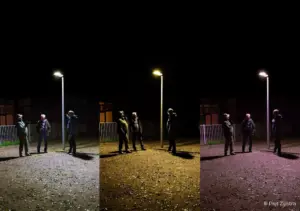
Findings and recommendations for developing and monitoring lighting solutions.
To evaluate the effects of the light modifications DARKER SKY developed and carried out light measurements, biodiversity monitoring and sociological surveys before and after implementation.
- Our Demonstrator Pilot Sites
- Principles for Environmentally-Sound Lighting
- Monitoring Light Pollution – measuring light pollution, assessing impact on biodiversity, and planning ALAN
- DARKER SKY Good Practice Stories
- Co-Design Approaches – Summary of all approaches and details for every demonstrator site

What we learned
The EVALUATION OF OUR PILOT SITES showed that light pollution can be reduced through practical lighting changes adapted to local conditions and needs.
- Light measurements recorded reductions in sky glow, light spill and illuminance.
- Biodiversity monitoring indicated how species and habitats respond to changes in artificial light, while highlighting the need for longer-term monitoring.
- Sociological surveys underlined the importance of public perceptions, particularly concerns around safety and the need for better communication.
- Co-design processes demonstrated the value of bringing local communities, authorities and experts together to develop solutions that balance environmental priorities with local needs.
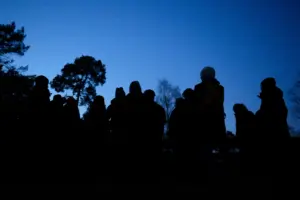
The project’s work confirmed that the recovery of natural darkness cannot be assessed through light measurements alone. Ecological, technical, social and economic aspects need be considered together. To support this, DARKER SKY developed the NIGHT RECOVERY WHEEL. The tool provides a common basis for assessing lighting interventions before and after implementation and identifying where further action or monitoring is needed.
- Pilot Sites Evaluations – Results as summary and detailed reports per site
- Night Recovery Wheel – Introduction and implementation instructions
What continues
DARKER SKY has laid foundations for further work, but reducing light pollution requires continued commitment beyond the project period. The next steps and recommendations include:
- Implementing the six Regional Action Plans and promoting the Transnational Dark Sky Strategy.
- Sharing the project’s findings and outputs through networks
- Continuing monitoring over longer periods and making methods more accessible to non-specialists.
- Strengthening communication and dialogue with local communities.
- Supporting and training people who can advocate for the protection of natural darkness in their regions and organisations.
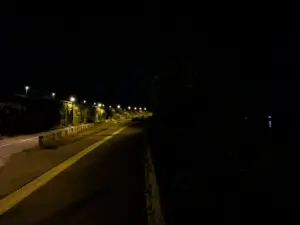
A key achievement of DARKER SKY was bringing different disciplines, expertise and local perspectives together. The project hopes that the partnerships, knowledge and outputs developed during the project will provide a useful basis for further action towards darker skies across the North Sea Region and beyond.
DARKER SKY was carried out in the framework of the Interreg North Sea Programme and was funded by the European Regional Development Fund (ERDF) of the European Union.
What we developed – overview
- Monitoring Guide: overview of methodologies for assessing light pollution and its effects on biodiversity as well as recommendations for lighting planning
- Co-Design Approaches: different participatory approaches to implement light modifications at pilot sites
- Pilot Evaluations: results from our pilot sites – synthesis and detailed evaluation reports
- Night Recovery Wheel: a framework for assessing progress towards night restoration.
- Regional Action Plans: concrete next steps for the participating cities and regions
- Transnational Dark Sky Strategy: shared framework for coordinated action across borders
- Light Pollution Knowledge Hub: online platform providing light pollution knowledge, DARKER SKY outputs and exchange among stakeholders
- DARKER SKY Good Practice Stories: examples of approaches and solutions from the demonstrator sites and North Sea Region
Authors: The Darker Sky Team
Disclaimer: DARKER SKY is not a project of the ELPC, so we don’t claim any credits for it. However, several ELPC members have worked in this project, and we think this project is worth telling about it. We hope that ELPC can help to spread and implement the output of DARKER SKY.
For more information visit: https://www.interregnorthsea.eu/darker-sky